
Service Schedules
Preventative maintenance that reads the hour meter — set each engine's intervals once, and the work orders write themselves.
The 100-Hour Service Doesn't Care What Month It Is
Manufacturers Write Intervals in Hours. Calendars Can't Keep Them.
Open any engine manual and the service table says the same thing: every 100 hours or every six months, whichever comes first. A busy season can put those 100 hours on an engine in a few weeks — and the spreadsheet where the intervals live doesn't send reminders, doesn't survive crew changes, and doesn't impress a surveyor. The interval that gets missed is the one a warranty claim turns on. YACHTWAVE® yacht maintenance software puts the intervals on the engine itself, checks every one of them nightly against the calendar and the hour meter, and generates the work order with the steps already attached.
Set It Once, on the Gear Itself
Intervals don't belong to the boat in general — they belong to the port main, the generator, the watermaker. Each one carries its own schedule, so each one comes due on its own clock.
Preventative Maintenance Schedules
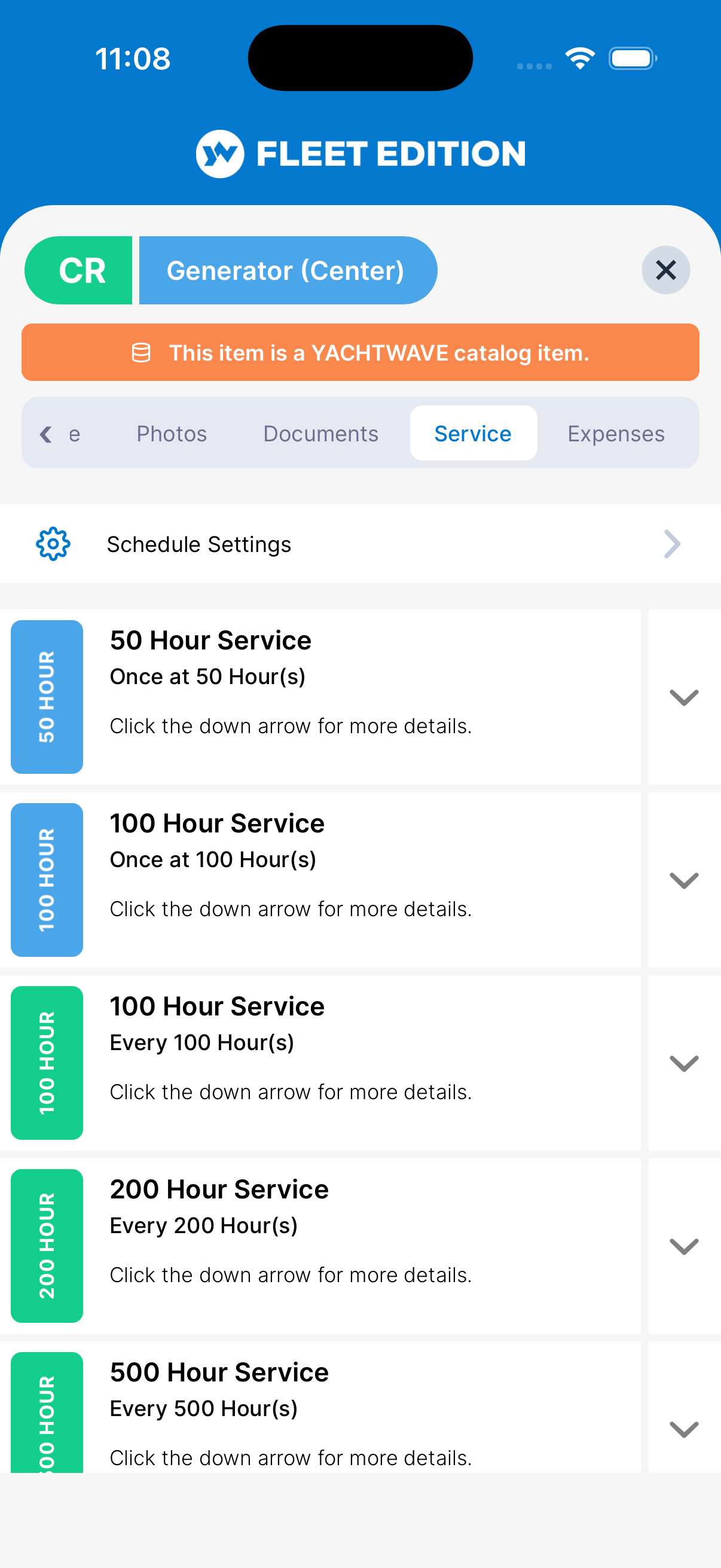
Attach service intervals to every engine, generator, and system on board — each item keeps its own list, straight from the manufacturer's service table. The 250-hour service belongs to the engine that's accumulating the hours, so it comes due when that engine says it does.
Calendar, Engine Hours, or Whichever Comes First
Four ways to write an interval: by calendar — days, weeks, months, or years — by engine hours, by both at once with whichever comes first winning, or as a general reference entry with no trigger at all. Hour-based and combined intervals live on the hour-metered gear, exactly the way the manual specifies them.
Named the Way You Say It
Call it “Oil & Filter Change” if that's what the crew calls it, or let YACHTWAVE title it automatically — “100 Hour Service” — from the interval itself. The schedule reads the way your boat actually talks about the work.

Or Don't Type Them at All — Thousands of Engines Come With Schedules Built
Pro & Ultimate
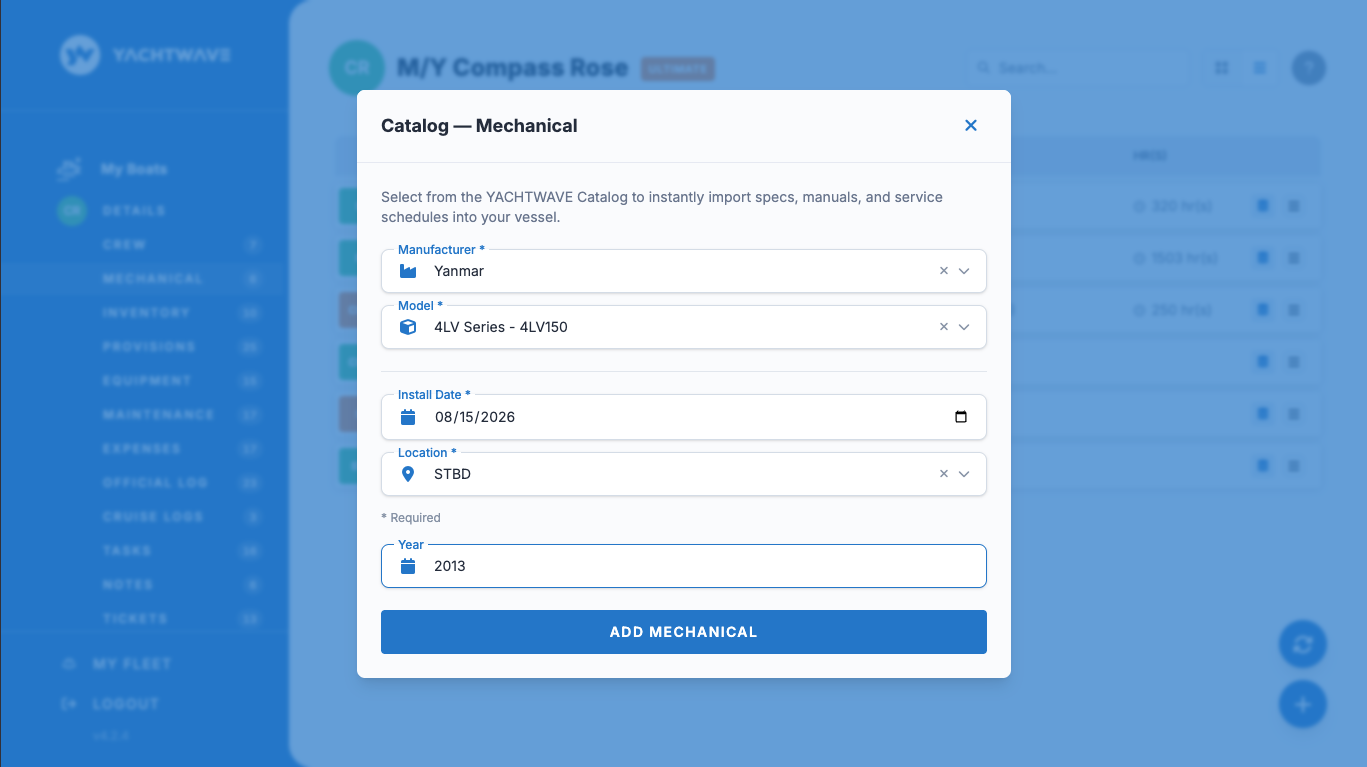
The hardest part of preventative maintenance isn't running the schedule — it's building it: finding the manufacturer's service table for your exact model and getting it in correctly. For thousands of marine engines and equipment items, YACHTWAVE® has already done that work — by hand.
Schedules Already Built for Your Model
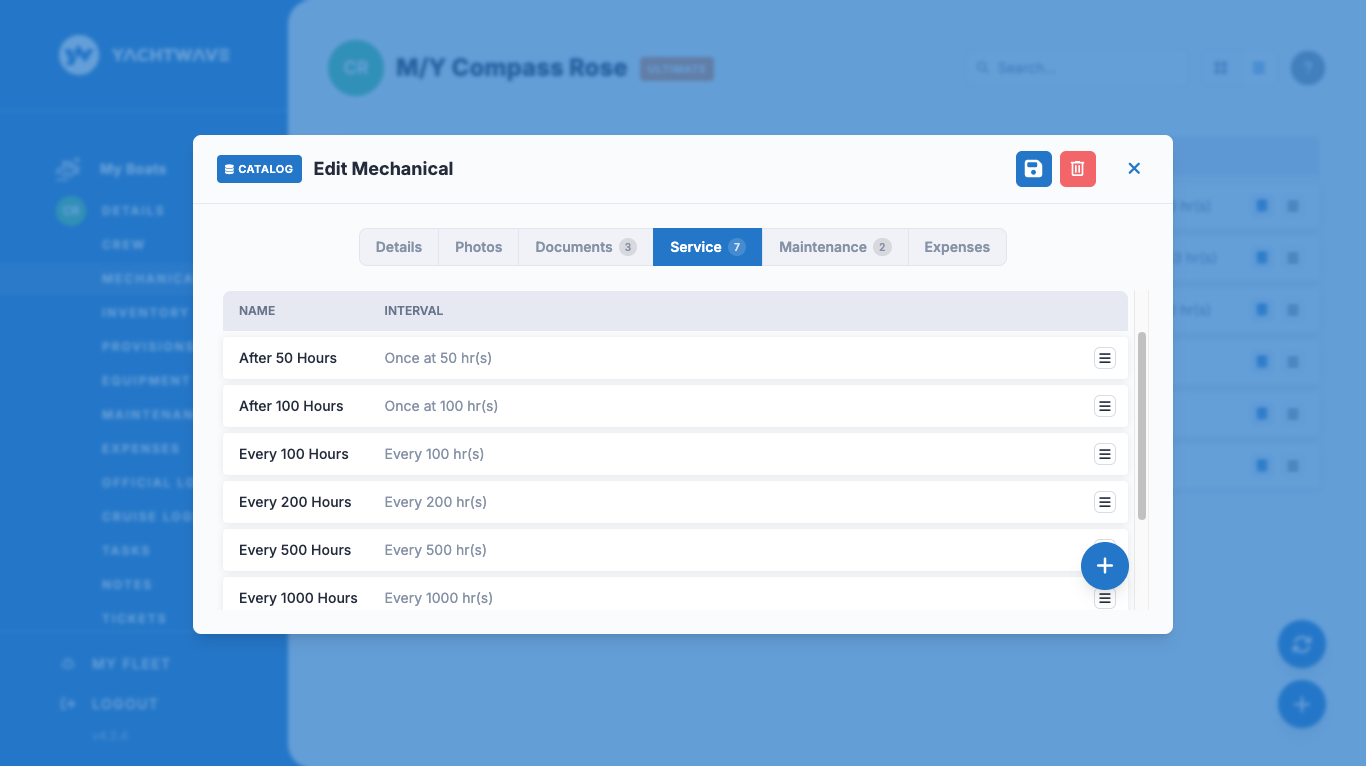
Pick your engine or equipment from the Engine & Equipment Database — thousands of marine engines, generators, and systems — and its record arrives with the factory service schedules already attached: the intervals, and the manufacturer's own maintenance steps inside them.
Every Schedule Reviewed by a Human
Each entry is built by YACHTWAVE's full-time researchers — a person finds the manufacturer's own maintenance documentation for that model, reads it, enters what it actually says, and verifies it against the source. Nothing is scraped, nothing is crowd-sourced, and nothing is generated by AI. A service interval schedules real work on a real engine, so a human decides what goes in.
The Standard the Warranty Is Measured Against
Because the intervals come from the manufacturer's own maintenance schedule, the tasks YACHTWAVE generates are the ones the builder specifies — the standard a warranty administrator measures you against, not a rule of thumb inherited from the last owner. More on the Engine & Equipment Database →
When It Comes Due, the Work Order Writes Itself
A reminder that just beeps still leaves a yacht manager to create the job, attach the procedure, and tell somebody. YACHTWAVE does all three — the schedule doesn't remind you to start the workflow, it starts the workflow.
Automatic Task Creation
When an interval comes due, YACHTWAVE creates the work task and notifies the crew — the schedule runs itself. Nobody watches a calendar, and nothing waits for the person who knew the interval to be aboard.
Maintenance Steps Become Checklists
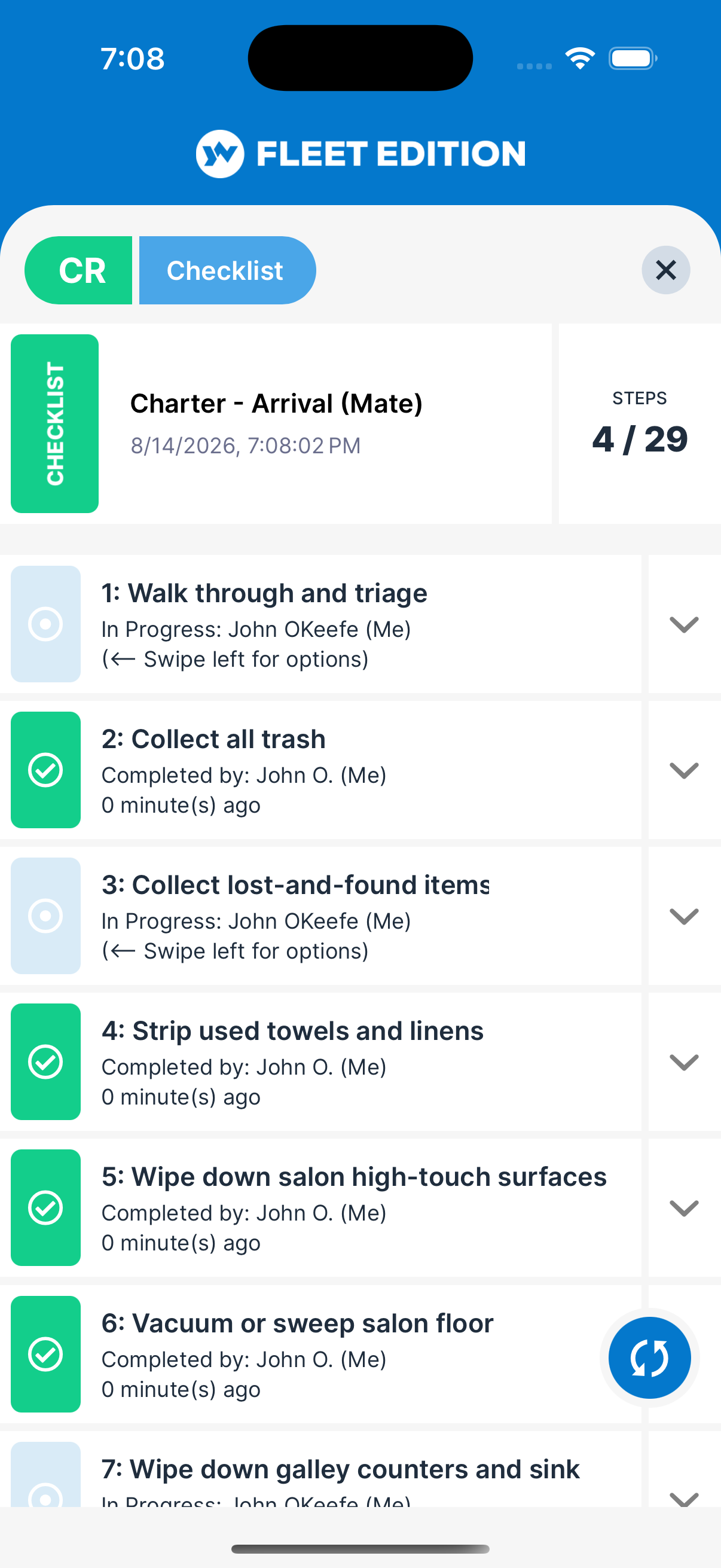
The steps you define on a schedule arrive as the checklist on the generated task — the job and the procedure travel together. Whoever picks the task up does the service the same way, step by step, whether they've done it ten times or never.
A Reminder Without the Work Order
Not every schedule should generate work — some are there so you see it coming. Switch off task creation on any schedule and keep the reminder alone; you still get notified, and nothing lands on the crew's task list until you decide it should.
Closed Into the Service History
Complete the generated task and the service lands in the maintenance log against that engine, with the date and the hours it was done at — and the schedule counts the next interval from there. The clock resets itself, and the proof files itself.
Warned Before It's Due. Reminded Until It's Done.
The point of a reminder window is lead time — enough to get the parts aboard and the yard booked before the Saturday the owner wants the boat, not a notification on the morning it was due.
Service Reminder Windows
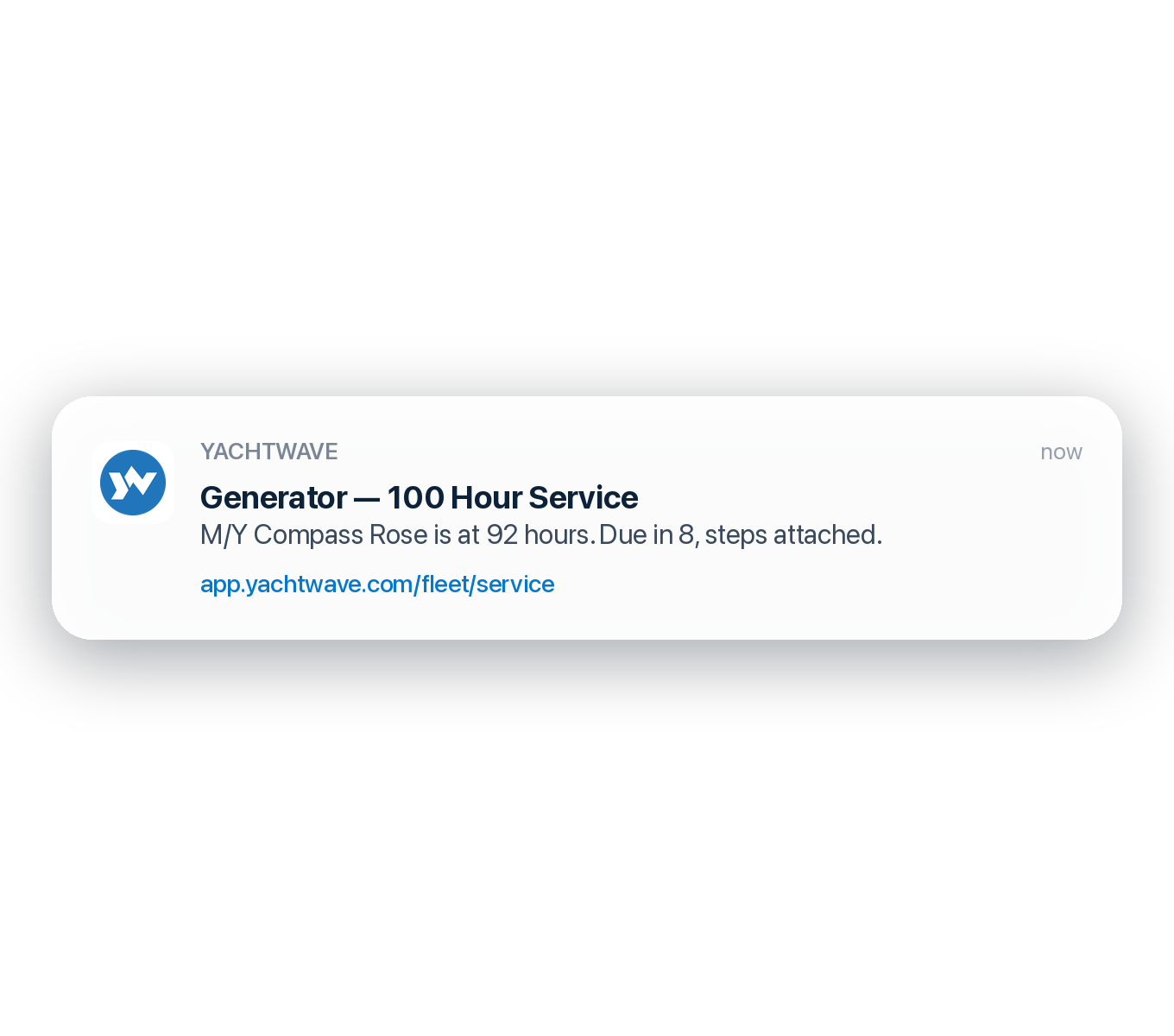
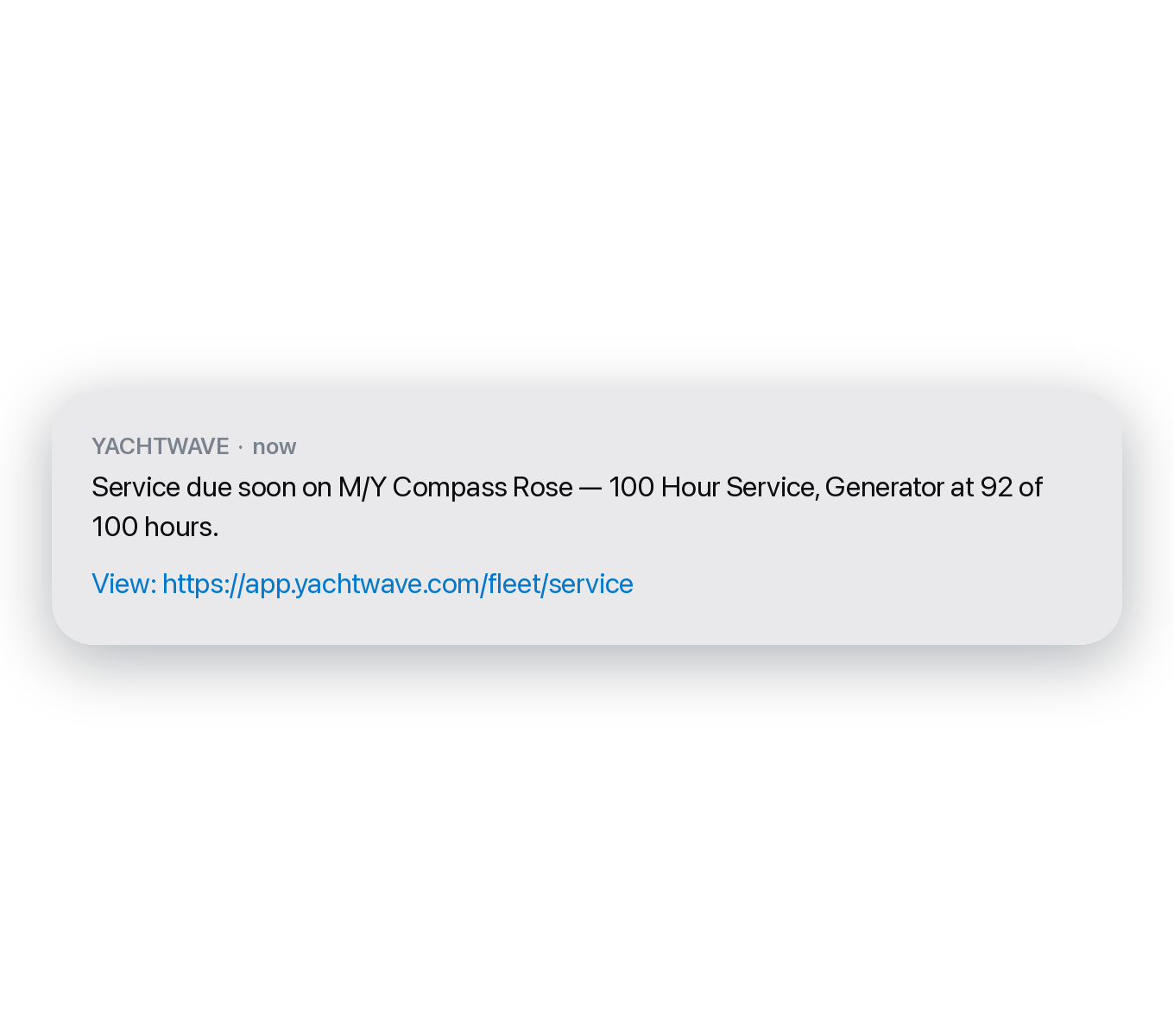
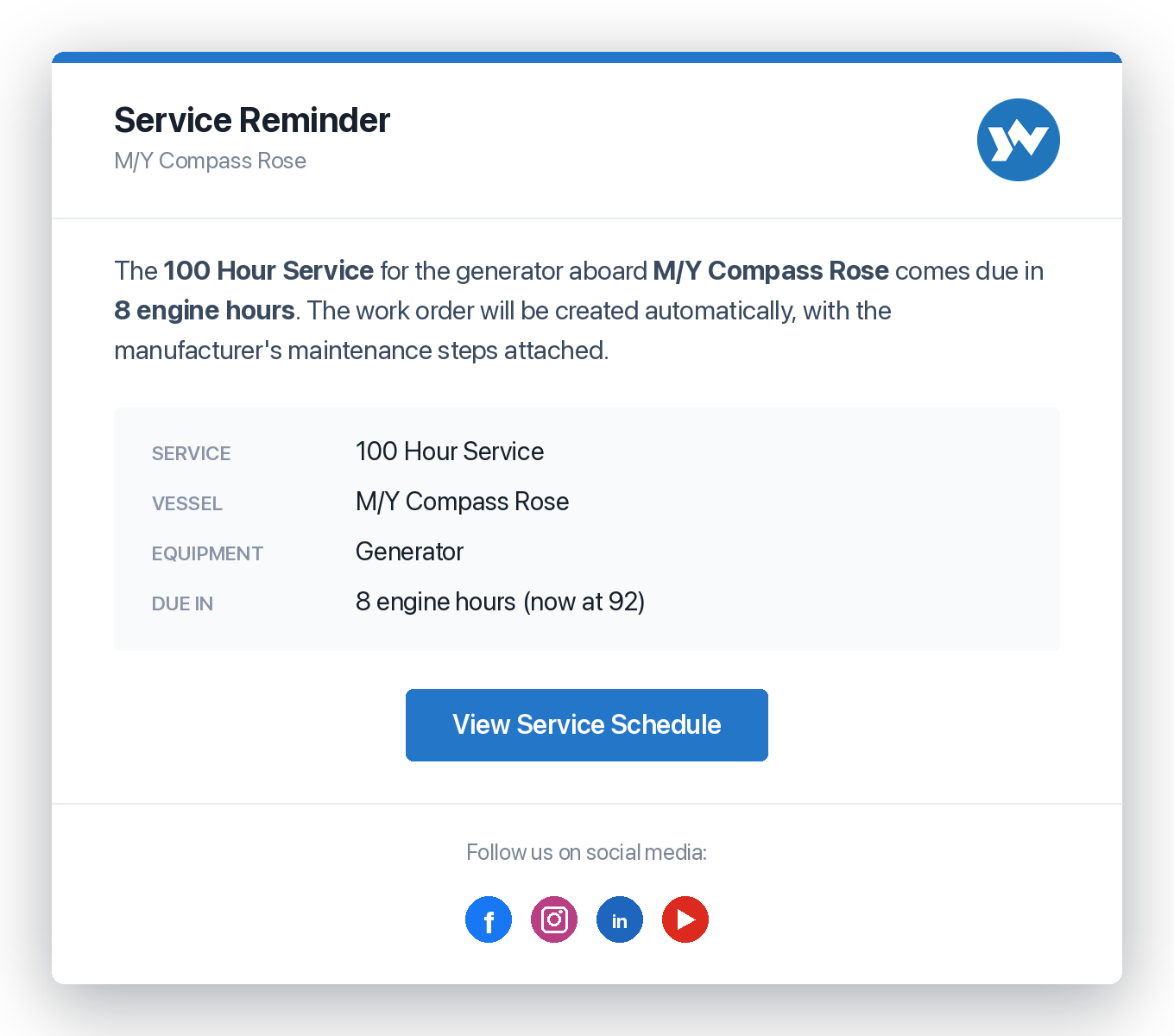
Schedules warn you ahead of the deadline — 30 days out on calendar intervals, 10 hours out on engine hours. That's the difference between ordering impellers with time to spare and discovering the service is due while the owner is walking down the dock.
Push, Text, and Email
The same reminder goes out by push, text message, and email — because a mate on a dock and a yacht manager at a desk don't check the same things. Whichever one gets read first has the boat, the item, and the hours in it, and a link straight to the schedule. More on Crew Notifications →
Evaluated Every Night
Every schedule on every vessel is checked automatically each night, against the calendar and the latest engine hours. For yacht managers running several boats, that's one standard interval set per engine model, watched across the whole fleet, with no human tracking anything.
Past Due Doesn't Go Quiet
A reminder that fires once is a reminder that gets missed once. Overdue schedules keep reminding you — for months on calendar intervals, for dozens of engine hours on hour-based ones — so a busy weekend can delay a service without ever erasing it.
Spares Stay Quiet
Equipment that isn't in service doesn't generate reminders. The spare pump on the shelf keeps its documentation and its history, but only the one actually running the boat gets a schedule nagging about it.
Preventative maintenance schedules, automatic task creation, maintenance steps that become checklists, and service reminder windows are included in every YACHTWAVE® edition — free Personal included. The Engine & Equipment Database, with pre-built factory service schedules for thousands of engines and equipment items, is part of the Pro and Ultimate editions.
Compare Every Feature, Edition by Edition →
Let the Schedule Watch the Hour Meter
Set each engine's intervals once — by calendar, engine hours, or whichever comes first — and get the work order, the checklist, and the reminder without anybody keeping track.
CONTACT US